
Tree Removal in Curran, MI
When the Forest Comes Down on Your Camp
Hear from Our Customers
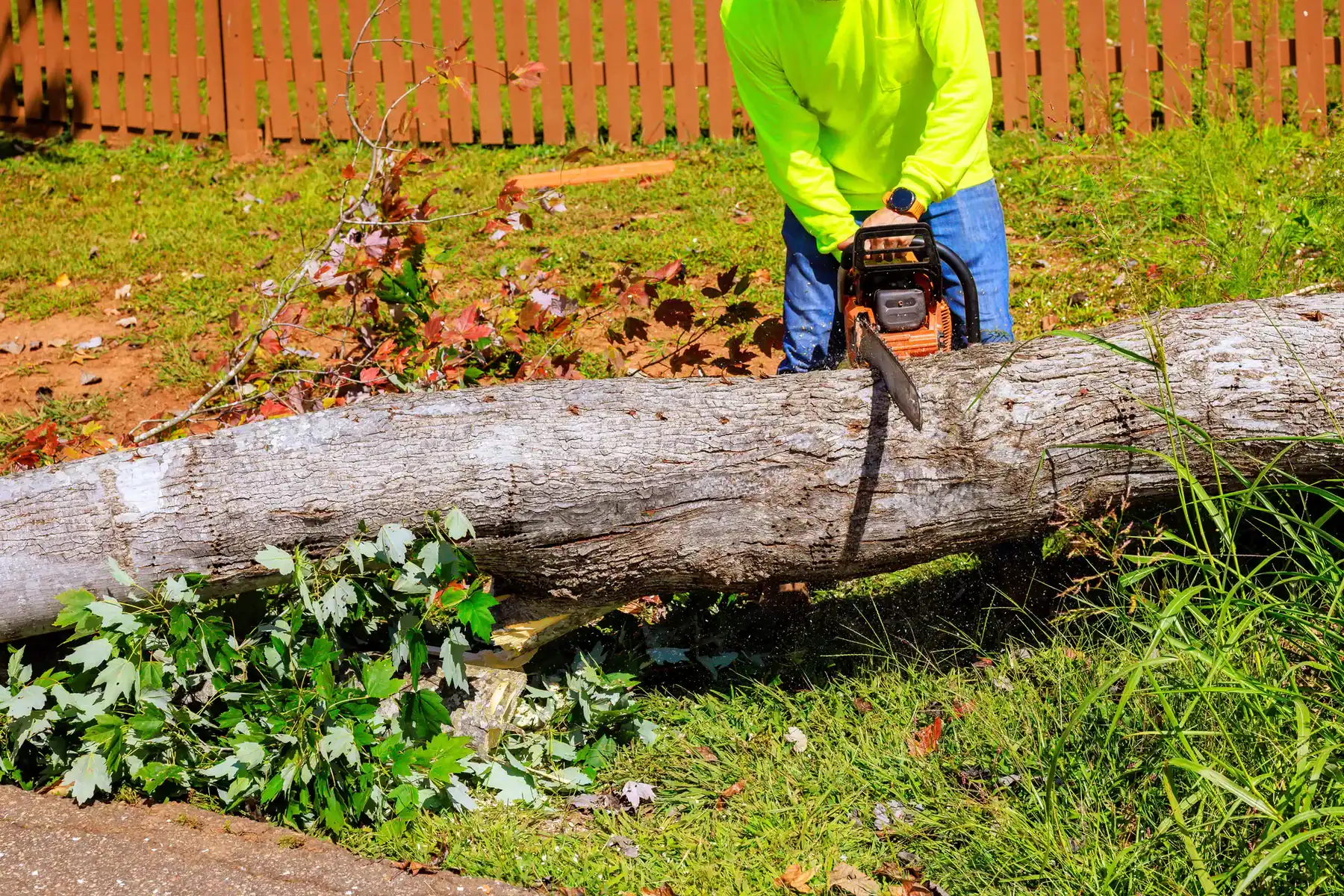
Tree Removal Service, Alcona County
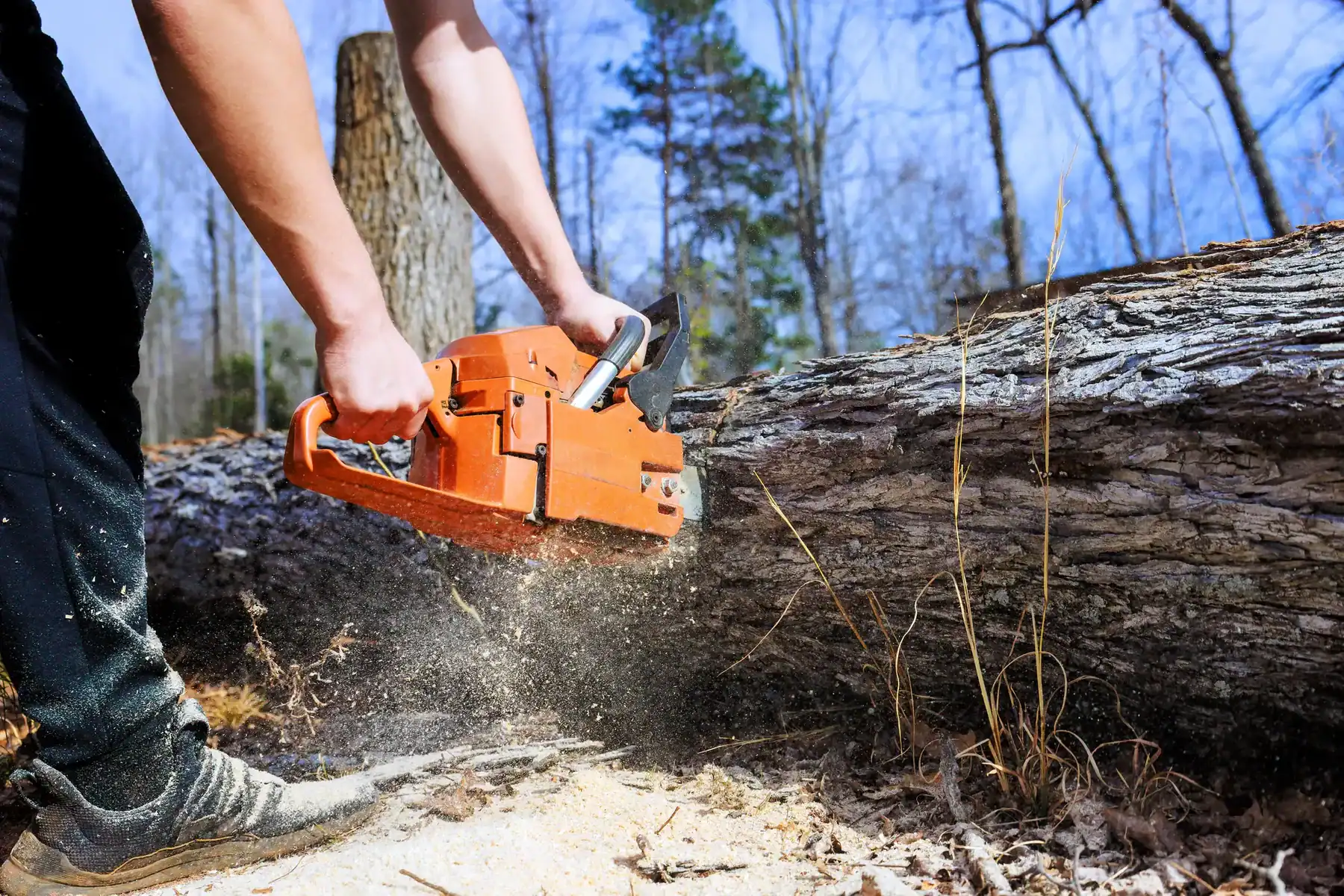
A lot of people who own land near Curran aren’t here every day. They’re downstate during the week, or all winter, and they come back in the fall to find a dead ash across the access road, a split oak hanging over the roof, or a whole tree that didn’t survive the last ice storm. That’s not a small inconveniencethat’s a blocked driveway, a structural threat, and a job that needs a real crew with real equipment, not a neighbor with a chainsaw.
When we finish the work, you drive in and your property is clear. The debris is gone. The hazards are identified and handled. You’re not staring at a brush pile for the next six months or wondering if the leaning tree next to the cabin made it through another freeze.
Alcona County gets hit hard by winter weather. The county was part of a 12-county disaster declaration after the March 2025 ice storm, and took another serious hit the following winter. Ice loading on mature second-growth timber causes the kind of failures that don’t announce themselves ahead of time. Getting ahead of the obvious hazards before the next storm is the difference between a manageable situation and an emergency call at midnight from two hours away.
ISA Certified Arborists Serving Curran and Northern Michigan
We’ve been doing this work for over seven years, and the standard doesn’t change based on how far north the job is. Every significant removal comes with ISA Certified Arborists and TRAQ-qualified risk assessorsthat’s a formal, documented tree hazard evaluation, not a gut-check estimate from someone who glanced at the tree from the driveway.
That matters out here. The properties around Curran and Mitchell Township aren’t suburban lots with one ornamental maple. They’re forested parcels that border the Huron National Forest, with mature trees that have been growing since the land was cut over a century ago. Knowing which ones are actual structural threatsand which ones are finetakes trained eyes and a real process.
We searched the local Alcona County tree service market thoroughly. Not a single operator lists ISA certification or TRAQ qualification. That gap is real, and it’s the reason property owners who want a professional standard call us.
How Tree Removal Works in Curran
It starts with a site walk. We never quote a job by phone and never send a crew without first walking the property and documenting exactly what needs to happen. On a remote Alcona County parcel, that step matters more than it does anywhere elseaccess routes need to be confirmed, equipment placement needs to account for soft ground or narrow drives, and the full scope needs to be clear before anyone picks up a saw.
You get a written estimate with a defined scope before any work begins. No verbal agreements, no surprises when the invoice arrives.
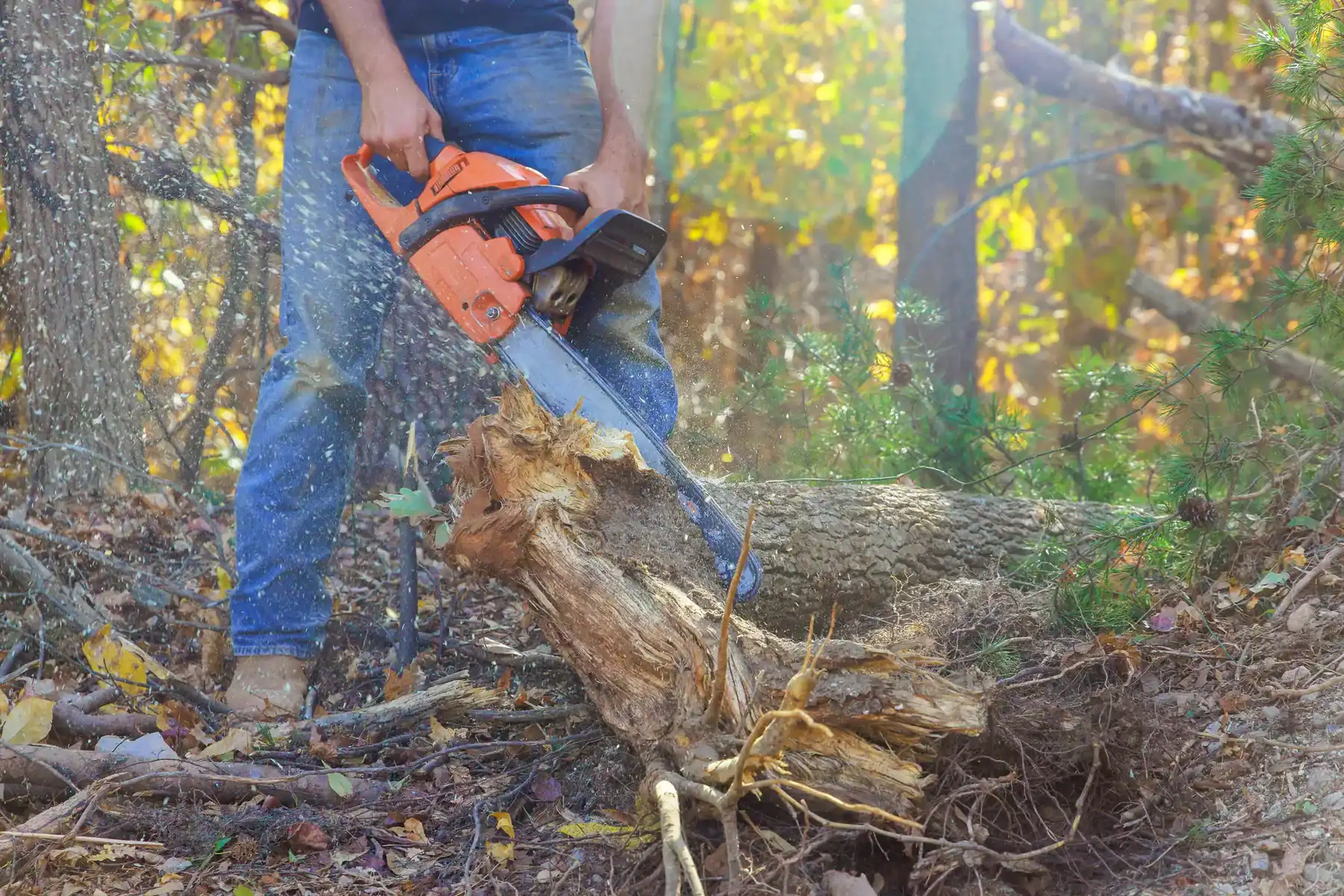
The removal itself is done piece by piece on anything near a structure, a vehicle, or a utility line. Dead ash treesand there are a lot of them in this part of northern Michigan thanks to emerald ash borerrequire particular care because the wood becomes brittle and unpredictable within a few years of death. A dead ash doesn’t behave like a healthy tree during removal, and a crew that treats it like one is a crew that causes damage. The piece-by-piece approach keeps the work controlled regardless of what the wood does.
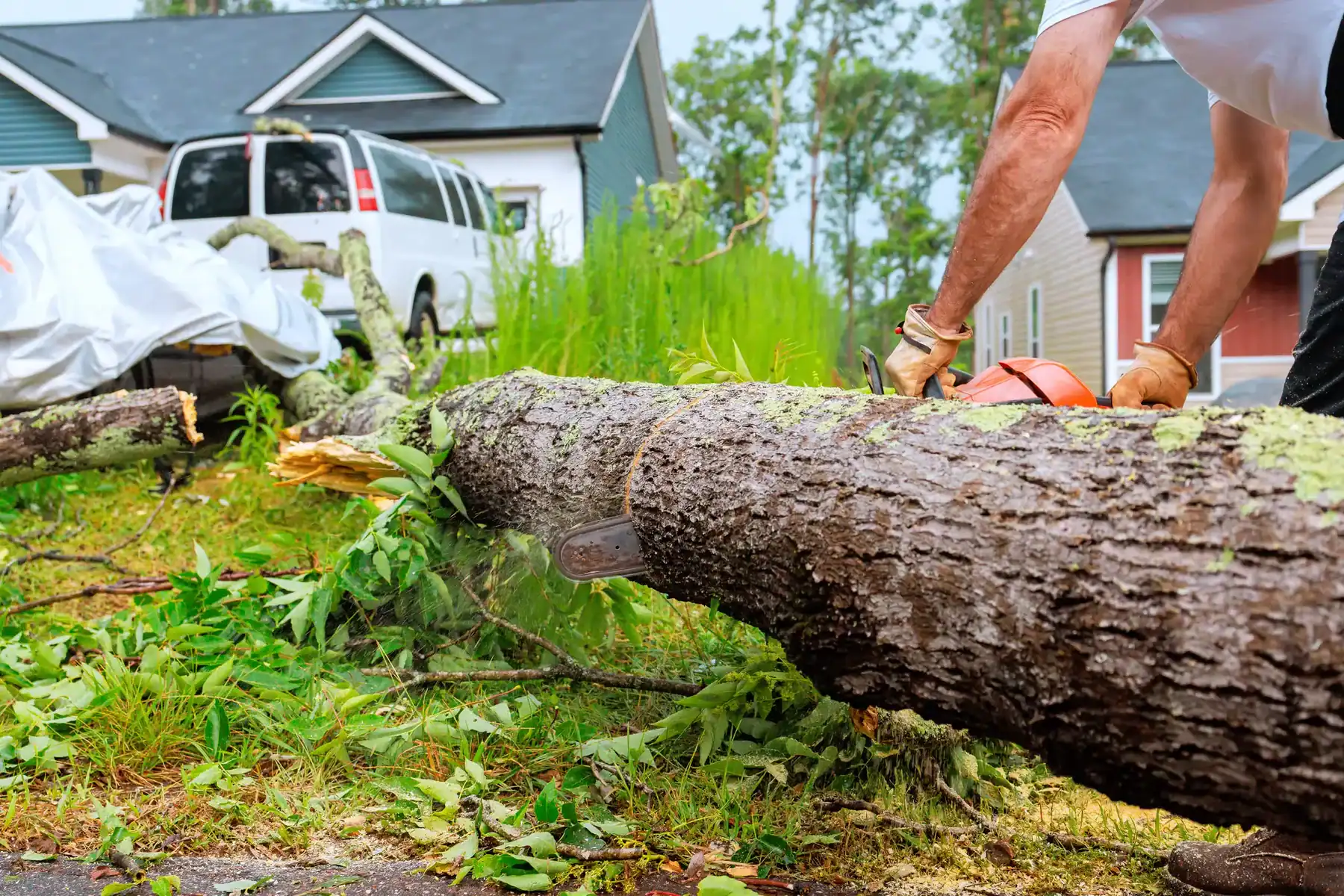
Cleanup is included. That means debris hauled, brush cleared, and access roads passable when we leave. If you’re not on-site for the jobwhich is common for seasonal property owners in the Curran areayou’ll know the work is done and your property is ready before you make the drive up.
Ready to get started?
Tree Services Available in Alcona County
Tree removal is the core of what we do, but the work out here often goes beyond pulling a single tree. Lot clearing and land clearing are common requests on Alcona County parcels where storm damage has accumulated over multiple seasons or where new property owners are dealing with hazards left behind by previous owners. Stump grinding is available as an add-on or standalone service. Emergency tree removal runs 24/7when a storm drops a tree on a structure or blocks access to a property, that’s not something that can wait until Monday morning.
For properties with trees near DTE or Consumers Energy lines, we have multiple crew members who are line-clearance certified with the specialized training and utility insurance required to work safely around energized power lines. Most local operators in this area cannot legally or safely perform that work.
Mitchell Township is an unincorporated community, and standard residential tree removal on private property typically doesn’t require a permit here. That said, if your parcel borders the Huron National Forest, it’s worth knowing where your property line ends and federal land begins before any work startswe’ll walk that with you during the site assessment. The goal is a clean job, a clear property, and no complications on the back end.
How do I get a tree removed in Curran if I'm not there in person?
This comes up constantly with Alcona County property owners who live downstate and own a hunting camp or seasonal cabin near Curran. We can work with you remotely. You describe the situation, provide photos or video if you have them, and we’ll schedule a site visit, walk the property, document what needs to happen, and send you a written estimate before anything is touched. You approve the scope, we complete the work, and you get confirmation when it’s doneincluding cleanup. You don’t need to be standing there for any of it.
What matters most in that situation is that the company you hire actually does what they said they’d do, at the price they quoted, and leaves the property the way they described. Our written estimates define the scope upfront so there’s no room for scope creep or surprise charges while you’re not watching. For absentee landowners managing property from two or three hours away, that process clarity isn’t a nice-to-haveit’s the whole reason you’d choose one company over another.
What makes a tree actually hazardous versus just old or large?
Size and age alone don’t make a tree dangerous. What makes a tree a genuine hazard is a combination of structural defectsthings like root decay, trunk cavities, included bark at major branch unions, significant lean toward a target, or crown diebackcombined with proximity to something that matters: a structure, a vehicle, a utility line, or a road. A 90-foot healthy oak in the middle of a clearing is not a hazard. A 50-foot dead ash leaning toward a camp building is a serious one.
This is exactly what TRAQ-qualified assessment is designed to answer. TRAQTree Risk Assessment Qualificationis a formal credential from the International Society of Arboriculture that trains arborists to evaluate and document tree risk systematically, not by feel. On properties near Curran, where mature second-growth forest surrounds most structures and emerald ash borer has left a significant number of standing dead ash trees throughout the area, having a documented risk assessment means you know which trees are actual threats and which ones are fine to leave. That’s a meaningful difference from someone telling you “that one looks bad” without any formal evaluation behind it.
Does homeowner's insurance cover tree removal after a storm in Michigan?
It depends on what the tree hit. If a tree falls and damages a covered structureyour cabin, a garage, a fencemost standard homeowner’s insurance policies will cover the removal of that tree as part of the structural damage claim. If a tree falls in your yard and doesn’t hit anything, most policies won’t cover the removal cost because there’s no structural damage to trigger the claim.
For Alcona County property owners, this is worth understanding before a storm hits rather than after. The ice storms that have repeatedly affected this areaincluding the March 2025 event that prompted a 12-county disaster declarationcan drop multiple trees at once. If any of them land on a structure, that’s a covered removal. If they land in the yard or across an access road without hitting a building, that’s typically out of pocket. Calling your insurance agent to confirm your specific coverage before you need it is a straightforward step that can save a significant amount of confusion during an already stressful situation.
Are dead ash trees more dangerous or more expensive to remove than healthy trees?
Both, sometimes. Dead ash treesand there are a lot of them throughout Alcona County due to emerald ash borerare among the more technically demanding removals in this part of Michigan. Once an ash tree dies, the wood begins to degrade relatively quickly. Within two to three years of death, the wood becomes brittle, the bark starts to slip, and the structural integrity of the trunk and major branches becomes unpredictable. A crew that approaches a dead ash the same way they’d approach a healthy hardwood is setting up for an uncontrolled situation.
The piece-by-piece removal method is standard practice for dead ash trees specifically because it keeps the work controlled. Rather than felling the whole tree, the crew works from the top down, removing sections in a calculated sequence that accounts for the wood’s condition. This takes more time and more skill than a straightforward felling, which can affect the price. But the alternativea dead ash dropped in the wrong direction because the trunk failed unexpectedlycosts far more to deal with than the removal itself. If you have standing dead ash trees on your property near Curran, getting them assessed and scheduled sooner rather than later is the practical move.
Do I need a permit to remove a tree on my property in Mitchell Township?
For most standard residential tree removal on private property in Mitchell Township, you don’t need a permit. Mitchell Township is an unincorporated community in Alcona County, and Michigan’s unincorporated townships generally don’t have the kind of tree ordinances you’d encounter in a city or a community with active HOA oversight. Alcona County’s building department enforces the Michigan Building Code and Michigan Residential Code for construction and development, but routine tree removal on your own land typically falls outside those requirements.
The one situation worth paying attention to is if your parcel borders the Huron National Forest. The national forest boundary runs through and around private land in Mitchell Township, and any work that could encroach on federal land is subject to U.S. Forest Service regulationsnot county or township rules. We’ll walk the property boundary with you during the site assessment to make sure the work stays clearly within your private parcel. It’s a straightforward step that prevents a simple removal job from turning into a regulatory issue after the fact.
How much does tree removal typically cost for a northern Michigan rural property?
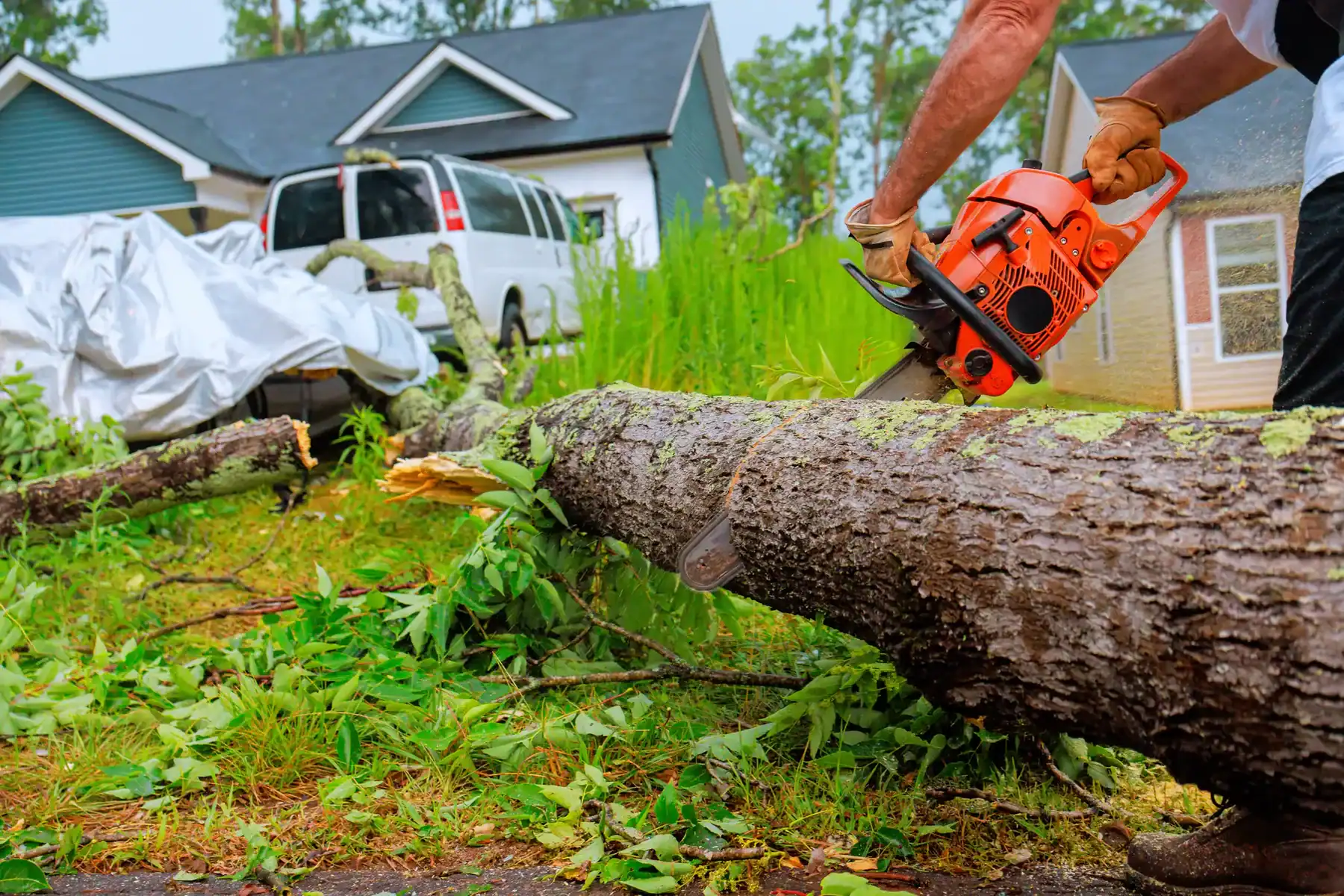
Tree removal costs vary based on a handful of factors that are especially relevant on rural Alcona County properties: the size of the tree, how close it is to a structure or utility line, whether it’s dead or structurally compromised, and how much debris needs to be cleared and hauled. Nationally, average tree removal runs around $700 to $1,000 for a typical job, with smaller removals starting around $150 and large or complex removals exceeding $2,000. Emergency removal of a tree that has already fallenlike after an ice stormcan come in lower, sometimes in the $300 to $500 range, because the felling work is already done.
On a forested property near Curran, the jobs tend to be less straightforward than a single ornamental tree in a suburban yard. Access road conditions, multiple trees needing assessment, dead ash removal, and distance from the nearest service hub all factor into a realistic estimate. The honest answer is that a written estimate after a site walk is the only number worth trustingphone quotes on rural properties are guesses. We provide written estimates with a defined scope before any work begins, so you know exactly what you’re agreeing to before the crew shows up.
Other Services we provide in Curran